
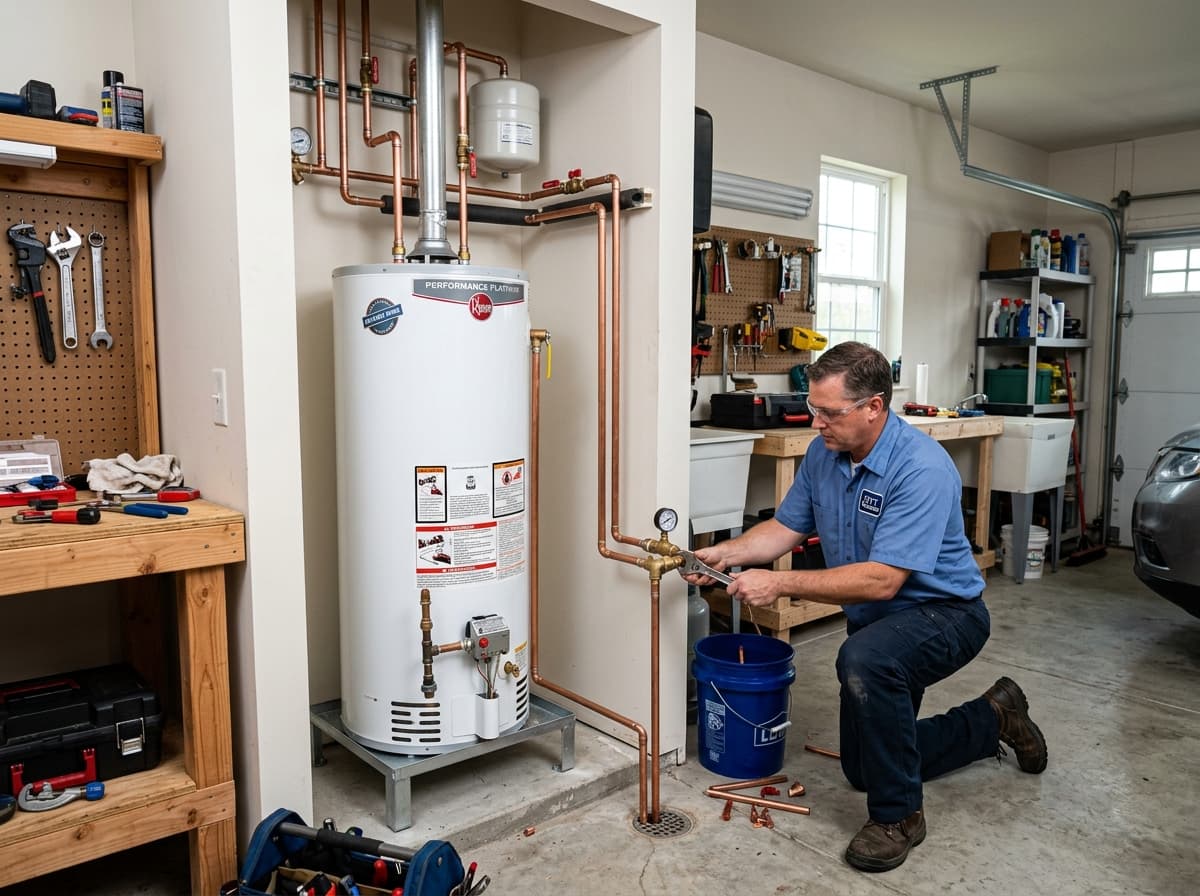
Most water heaters give clear warning signs before they completely break down. Catch these early and you can replace on your schedule — not in an emergency.
A failing water heater rarely dies without warning. The problem is that most homeowners don't know what to look for until they're standing in a cold shower or mopping up a flooded utility room. The good news: water heaters almost always telegraph their problems weeks or months in advance. Here are the five signs we see most often in St. George homes.
1. Your Hot Water Runs Out Faster Than It Used To
If your morning shower used to last 15 minutes but now you're out of hot water in 8, your water heater is losing capacity. Over time, sediment — especially the calcium and magnesium that's abundant in Southern Utah's hard water — builds up on the bottom of the tank. That sediment layer insulates the water from the heating element, forcing your unit to work harder for less output.
A professional flush can sometimes fix this if caught early. If the buildup is severe, replacement is usually the better investment.
2. Rusty or Discolored Hot Water
Turn on your hot water tap and hold a white cloth or cup under it. If the water looks orange, brown, or has a metallic smell, you likely have corrosion inside your tank. Steel water heater tanks have a sacrificial anode rod designed to corrode instead of the tank itself — but once that rod is depleted, the tank starts to rust from the inside out.
Discolored hot water is a serious warning sign. Once the tank itself is corroding, a slow leak or sudden rupture isn't far behind.
3. Rumbling, Popping, or Banging Noises
A water heater should be nearly silent. If yours is making rumbling, popping, or banging sounds, that's sediment being heated and disturbed at the bottom of the tank. In Southern Utah, where water hardness runs high, this buildup happens faster than in most parts of the country.
Beyond the noise, hardened sediment causes the tank to overheat at the bottom, accelerating wear and shortening lifespan significantly.
4. Visible Moisture Around the Base of the Tank
Any moisture around the base of your water heater deserves immediate attention. Small fractures in the tank's inner lining — often caused by years of thermal expansion — can cause slow seepage that looks like minor condensation but is actually a sign the tank is compromised.
Don't ignore this. A tank that's seeping can rupture, and even a 40-gallon tank holds enough water to cause serious structural damage. If you see pooling or consistent moisture, call a plumber the same day.
5. The Unit Is More Than 10 Years Old
Most conventional tank water heaters are designed to last 8–12 years. If yours is a decade old and showing any of the symptoms above, proactive replacement almost always costs less than an emergency replacement — plus you avoid the mess and stress of a failure.
You can find the age of your water heater by looking at the serial number on the label. The first two digits typically indicate the year of manufacture, though this varies by manufacturer.
When to Call Marlin
If you're seeing any of these warning signs, it's worth having one of our techs take a look before the problem becomes urgent. We'll give you an honest assessment of whether a flush and tune-up can extend the life of your unit or whether replacement makes more financial sense. We carry tank and tankless units and can often complete an installation the same day.
Southern Utah's hard water is tough on water heaters. Getting ahead of the failure curve is the smartest thing you can do for your home's plumbing system.

Marlin Plumbing Heating & Air
Serving St. George, Utah since 1978